
Promoting environmentally friendly inland shipping
Inland shipping is an eco-friendly mode of transport. There are several European initiatives to make this waterway transport even more environmentally sound.
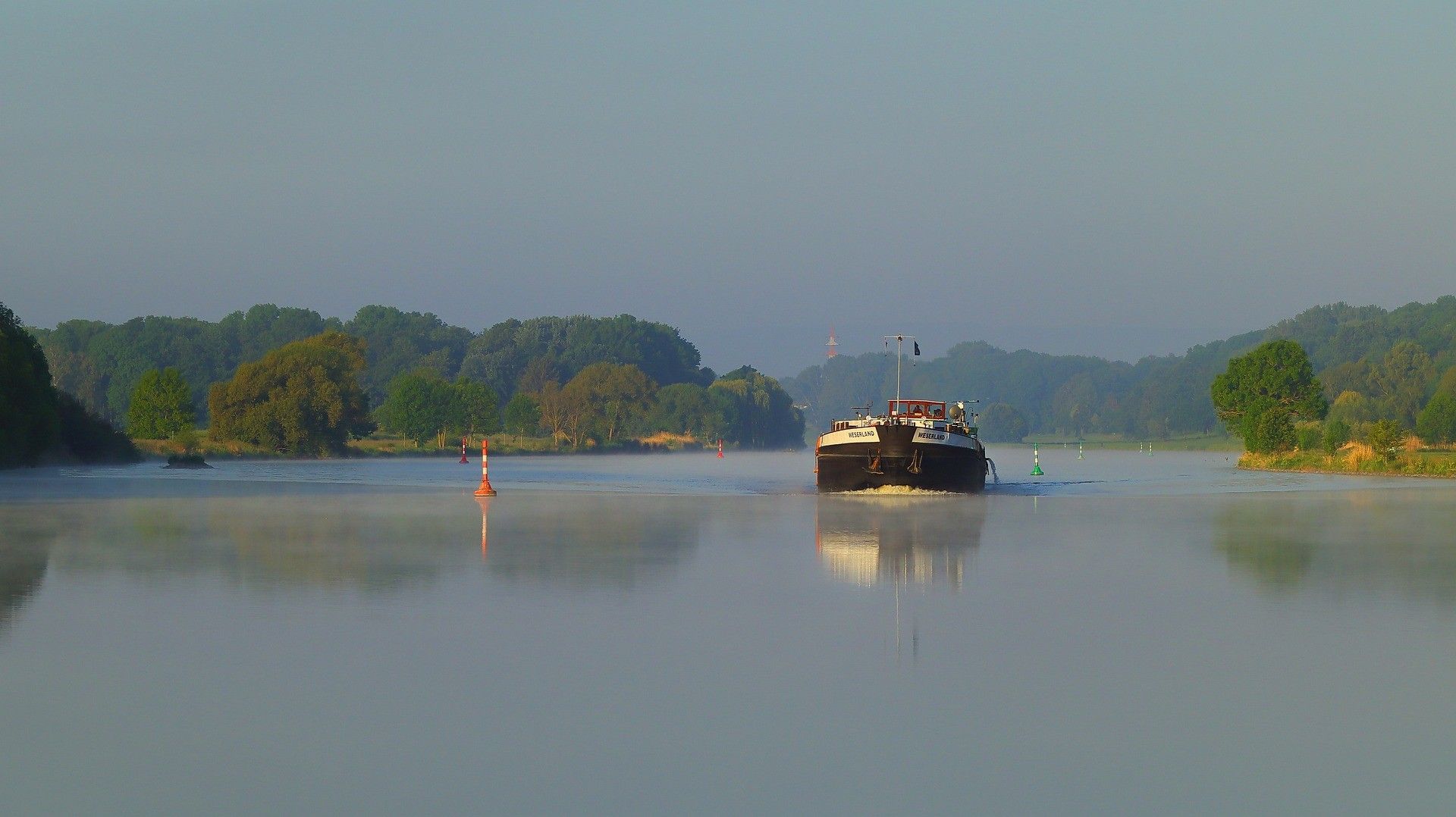
Inland navigation and environmental protection go hand in hand. Key issues are high and low water levels, the search for sustainable propulsion systems, how to dispose of waste generated on board as well as the protection of people on board and local residents. In order to counteract high and low water levels, early warning systems are being developed and flood retention basins are being built. In addition, there are pilot projects to test the marketability of sustainable propulsion systems in inland navigation. Thanks to the Convention on the collection, deposit and reception of waste produced during navigation on the Rhine and inland waterways (CDNI), a system including the disposal of waste generated on board has also been established.
Since the beginning of the 20th century, environmental protection has fallen under general safety measures at the Central Commission for the Navigation of the Rhine (CCNR). In the field of inland navigation, there is a key distinction between environmental protection relating to accidents or incorrect working methods and techniques on board and environmental protection in terms of treating the waste that is generated on board. Environmental and safety measures therefore go hand in hand. A standardised set of technical regulations and rules for the transport of dangerous goods form the basis for accident prevention and high levels of safety on the waterways.
The CCNR also aims to reduce greenhouse gas emissions and air pollutants in inland navigation, for example by considering how to sustainably reduce fuel consumption and utilise other energy sources such as natural gas and alternative combustion technologies. Inland shipping is one of the most climate-neutral ways of transporting goods, but the emissions produced by outdated ship engines are jeopardising this. In 2018, CCNR member states therefore signed the Mannheim Declaration, which aims to achieve climate-neutral inland navigation by 2050 (more information). To achieve this goal, the CCNR has developed a roadmap for reducing emissions (more information).
In order to create standardised rules for the collection, delivery and disposal of waste from goods and passenger transport, the CDNI was drafted and came into force in 2009. The convention makes an important contribution to environmental protection, the safety of inland navigation, improving water and air quality and protecting the health of personnel. It includes a general ban on discharges into surface waters as well as regulations on the avoidance and treatment of ship-generated waste and its discharge to land-based facilities. The CDNI sets out three separate categories of waste: waste containing oil or grease (e.g. waste oil), waste from the cargo area that arises during the transport of dry or liquid goods, and other waste from ship operations (e.g. paper or domestic waste water).
Previously, only solid and liquid materials were recorded as cargo area waste. As of 1 October 2024 and the introduction of the degassing/venting ban, this category will also cover harmful gaseous residues (vapours) from cargo. Every time goods are transported, a small amount of the load remains in the hold/tank. In most cases, this residue must be removed. If the cargo being transported contains hazardous substances, there will also be residual vapours after unloading. Current practice allows these vapours to be freely released, bar a few exceptions. Degassing may be necessary for various reasons. Given that such vapours might endanger the health of the crew or residents near inland waterways, an amendment to the CDNI introducing a three-stage degassing/venting ban was adopted. The three levels will be rolled out in stages, with additional substances covered by the ban each time.
The new amendment should ensure that 95% of harmful vapours are no longer released, a significant improvement for the environment and the sustainability of inland shipping (more information).
Links
Contact
Elisabethenstrasse 33
P.O.Box
Switzerland - 4010 Basel